

AI Security Starts at the Prompt
Cybersecurity has always been about protecting organisations from evolving threats. Today, however, the conversation extends far beyond firewalls, malware protection, and threat detection.
Businesses are taking a broader view of cybersecurity. They are looking more closely at the technology they invest in, where it is developed, how it is governed, and whether it aligns with their long-term business strategy.
This isn't a reaction to a single event. It is the result of years of changing regulations, geopolitical uncertainty, increasing cyber threats, and growing awareness of supply chain risk.
As a result, European cybersecurity solutions are gaining momentum. Not because organisations are rejecting global technology providers, but because they are broadening the way they evaluate cybersecurity.
Cybersecurity Is Becoming a Business Conversation
Historically, cybersecurity decisions often sat within the IT department. Today, they involve leadership teams, procurement specialists, compliance officers, and risk managers.
Security has become a board-level conversation because cyber risk has become a business risk.
Organisations are now considering questions that go beyond technical specifications.
- Where is our data processed?
- Who develops and governs the technology we rely on?
- How resilient is our supply chain?
- Will this solution continue to support us as regulations evolve?
These questions reflect a growing desire for transparency and accountability rather than simply another list of product features.
Sovereignty is More than a Location
Data sovereignty is often misunderstood as simply knowing where data is stored.
In reality, it is much broader. It is about understanding who controls critical technologies, how those technologies are governed, and how they align with regulatory and organisational requirements.
Across Europe, regulations such as the General Data Protection Regulation (GDPR) have already encouraged organisations to strengthen their approach to data governance. Looking ahead, initiatives focused on cyber resilience and supply chain security continue to reinforce the importance of transparency throughout the technology ecosystem.
For many organisations, sovereignty has become part of wider risk management.
It provides greater confidence that technology decisions support both operational and regulatory objectives.
Supply Chain Trust Has Never Been More Important
Recent cyber incidents have shown that vulnerabilities do not always originate from within an organisation.
Third-party software, managed services, hardware manufacturers, and technology vendors all form part of today's cybersecurity landscape.
This has encouraged organisations to examine not only the products they deploy, but also the organisations behind them.
Questions around governance, development practices, security standards, and long-term accountability have become increasingly important during procurement.
Simplicity Is Becoming A Competitive Advantage
Alongside trust and sovereignty sits another growing priority. Simplicity.
Cybersecurity environments have become increasingly fragmented over the last decade.
Businesses often manage multiple security platforms across different vendors, each requiring specialist knowledge, ongoing maintenance, and operational oversight.
This complexity can slow deployments, increase operational costs, and make it more difficult for organisations to maintain visibility across their environments.
Many organisations are now looking for solutions that simplify operations without compromising capability.
Security should enable business growth, not become another obstacle to overcome.
Why this matters for IT Partners
For IT partners, these changing expectations represent a significant opportunity.
Customers are looking for guidance rather than simply products. They want advisors who can explain why one approach is better suited to their organisation than another.
This changes the role of the partner. Success is increasingly built on understanding business priorities alongside technical requirements.
Partners who can confidently discuss transparency, governance, resilience, and simplicity will naturally differentiate themselves in a crowded marketplace.
Hammer's Insight
At Hammer Distribution, we've worked alongside partners for more than three decades. Throughout that time, one thing has remained constant. The market never stands still.
Our role has always been to understand where technology is heading, listen to partner feedback, and help organisations prepare for what comes next.
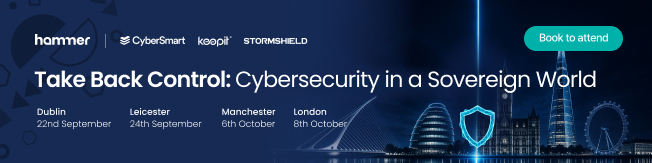
The increasing demand for sovereign cybersecurity solutions reflects the conversations we're having every day. Partners want technology they can trust, customers want greater transparency and businesses want confidence that the solutions they deploy today will continue to support them tomorrow.
The Future of European Cybersecurity and IT Strategy
European cybersecurity is gaining momentum as organisations become more informed, asking better questions, and taking a broader view of what effective security really means. Increasingly, they recognise that strong cybersecurity is built on more than technical capability alone.
Instead, it is shaped by principles such as transparency, trust, control, and resilience, which are now influencing how organisations evaluate the technology they choose to deploy. For IT partners, understanding these priorities today will be key to building stronger, more meaningful customer relationships tomorrow.